
Myofunctional Therapy for Sleep Apnea: Is It Right for You?
Better nighttime breathing starts with better muscle function. At Refreshed Sleep, myofunctional therapy for sleep apnea is tailored to you, using guided exercises to improve tongue posture, oral muscle coordination, and breathing habits that support your airway while you sleep.
Explore Myofunctional Therapy
How Myofunctional Therapy Retrains Tongue and Facial Muscles
According to the American Speech-Language-Hearing Association (ASHA), chronic mouth breathing affects 10.1%–15.9% of children, while orofacial myofunctional disorders have been reported in 62%–73.3% of people receiving orthodontic treatment.
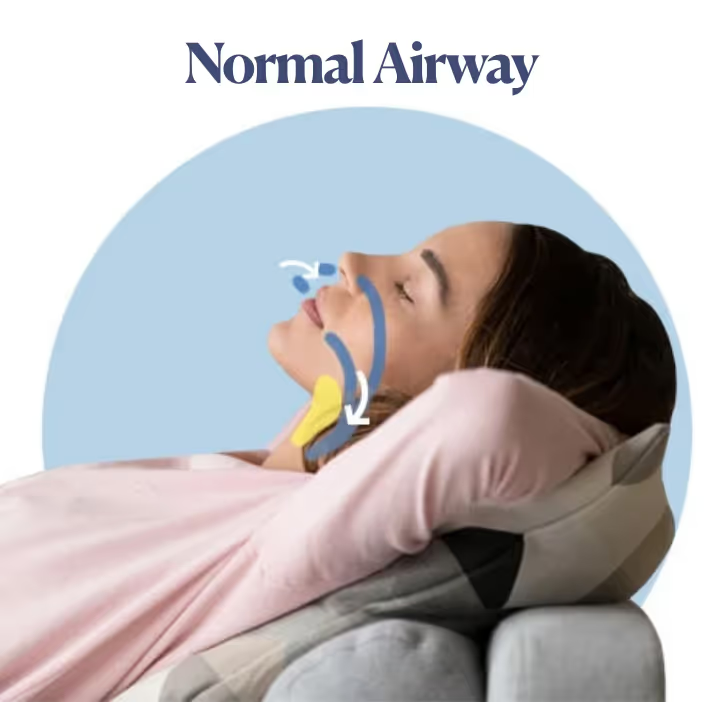
Your tongue, lips, soft palate, throat, and other oral and facial muscles all play a role in breathing. When these muscles are not working together effectively, the tongue and soft tissues may be more likely to interfere with the upper airway during sleep.
Also known as orofacial myofunctional therapy, this treatment focuses on improving muscle tone, tongue posture, and coordination through repeated exercises and healthier breathing habits. Unlike oral appliance therapy, which gradually repositions the lower jaw to help keep an open airway, myofunctional therapy works by retraining the muscles and everyday patterns that support breathing.
What Myofunctional Therapy Exercises May Include
Your program may include targeted sleep apnea exercises that improve muscle strength, coordination, and tongue posture.
- Tongue exercises: Support a healthier resting position and control.
- Mouth and throat exercises: Work the soft palate and throat muscles.
- Lip and cheek exercises: Strengthen facial muscles and oral function.
- Controlled vowel sounds: Engage key mouth and throat muscles.
Together, these mouth and throat exercises support nasal breathing while training the tongue, soft palate, and throat muscles to work in better coordination and reinforce healthier breathing patterns.
Your myofunctional therapy exercises are tailored to your needs and progressed over time. Consistent practice may help improve snoring, daytime sleepiness, and sleep quality as part of broader obstructive sleep apnea care.
There are trained myofunctinal therapists that can help build a customized treatment plan for your needs. Our office can help you connect with a great local provider
How Nasal Breathing Practice May Help Reduce Mouth Breathing
Nasal breathing exercises may include practicing relaxed breathing through the nose with the lips closed and the tongue resting in a healthier position. Over time, this can help reduce habitual mouth breathing and encourage better breathing patterns alongside myofunctional therapy.
If nasal blockage regularly makes breathing difficult, it is also important to address the underlying cause.

Can Myofunctional Therapy Help Sleep Apnea and Chronic Snoring?
Myofunctional therapy may be considered for patients with:
- Diagnosed obstructive sleep apnea who may benefit from complementary muscle training
- Chronic snoring linked to sleep-disordered breathing
- An existing treatment plan, such as oral appliance therapy, that may benefit from added support
Research has linked myofunctional therapy with improvements in snoring and daytime sleepiness, although results vary and it is generally used alongside other appropriate treatments.
Persistent snoring, gasping during sleep, or excessive daytime sleepiness can also point to an underlying sleep disorder. If these symptoms sound familiar, get more insight on sleep apnea symptoms or explore our snoring treatment.
When Myofunctional Therapy May Complement Sleep Apnea Care
At Refreshed Sleep, myofunctional therapy can complement a personalized treatment plan, including oral appliance therapy, when it fits your needs.
Not yet diagnosed? We can help you take the next step toward at-home sleep testing before treatment begins.